Select Size & Colors

58-Year-Old Discovers Why Her Morning Foot Pain Faded After One Simple Change

Last year, I dreaded mornings.
Not because of work. Not because of early alarms. Because of the first steps out of bed.
That sharp, stabbing pain in my heel. Like stepping on a nail every single morning.
I'd hobble to the bathroom, gripping furniture along the way. By the time I made it to the kitchen, it would ease up. But I knew tomorrow would be the same.
When did walking become something I had to recover from?
The Two Types of People Over 50
I started noticing them everywhere.
At the grocery store. At the park. At family dinners.
There seemed to be two types of people dealing with foot pain.
Type A: Accepting it. Sitting more. Saying no to walks. Quietly letting their world get smaller.
Type B: Still moving. Still active. Still saying yes to life. Like they'd figured something out.
The strange thing?
It didn't correlate with age.
I saw 70-year-olds in Type B. I saw 50-year-olds in Type A.
What was the difference?
Talked to podiatrists. Read studies from the American Orthopaedic Foot & Ankle Society. Interviewed people on both sides.
The answer wasn't more rest. Though that helped short-term.
It wasn't genetics. It wasn't just "getting older."
It was something so simple that most people overlook it entirely. It was what they put on their feet.
What 3 Months of Research Revealed
Here's what the research reveals.
Plantar fasciitis affects 1 in 10 people at some point in their lives. It's the most common cause of heel pain.
The plantar fascia is a thick band of tissue that runs along the bottom of your foot. When it gets irritated or inflamed, every step hurts.
Most people think they need more support. More cushioning. More arch control.
But here's the part that surprised me.
A 2020 study from the Journal of Foot and Ankle Research found that people who switched to minimal footwear showed significant improvement in foot strength and pain reduction.
Your foot has 26 bones, 33 joints, and over 100 muscles. It was designed to move, flex, and adapt.
What modern shoes do to your balance:
- Weaken the 20+ muscles in each foot
- Create dependency on artificial arch support
- Restrict natural movement patterns
- Shorten your Achilles tendon over time
- Block sensory feedback to your brain
And most modern shoes are actively preventing that.
What Most People Try First (And Why It Fails)
Here's what most people do when they start feeling that heel pain.
They buy insoles. Expensive ones with arch support and gel cushioning. It costs $30 to $80 a pair.
The first few days feel better. Then the pain comes back. So they buy different insoles.
Then there's cortisone shots. $150 to $300 per injection. It masks the pain for a few weeks. But it's treating the symptom, not the cause.
Then physical therapy. $150 to $300 per session, twice a week.
The stretches help. But life gets busy. You stop going. The pain returns.
What these solutions really cost you:
- $300-500 on insoles that don't work long-term
- $150-300 per cortisone shot (temporary relief)
- $2,000-5,000 for a full PT program
- Months of your time and energy
And here's the thing nobody tells you about these solutions: they're treating the symptom while ignoring the cause.
Your feet aren't weak because you have plantar fasciitis.
You have plantar fasciitis because your feet are weak.
Then There's Custom Orthotics
Custom orthotics cost $400 to $800 a pair.
First you need a referral. Then you wait weeks for the appointment.
Then they make molds. Then you wait more weeks. Then follow-ups because they never fit right.
That's two months of your life.
And for what? Orthotics prop you up. They do the work your foot muscles should be doing. So those muscles get weaker. A year later, you need new ones.
The real problem:
- They treat the symptom, not the cause
- Your feet become dependent
- Muscles weaken over time
- The cycle never ends
I watched my sister go through this
Three pairs of orthotics in five years. Each one more expensive than the last. Still in pain.
Once you rely on external support, your body adapts to needing it.
It becomes a self-fulfilling prophecy.
There Had to Be a Better Way
I don't say this to scare you. I say it because I was headed down this path myself.
There had to be something better.
What I realized the solution should look like:
Then a podiatrist I interviewed mentioned something.
She'd been recommending a different approach to her patients with chronic foot pain.
Something that lets the foot heal itself while still being comfortable.
"Most of my patients are in their 50s, 60s, and 70s," she said. "They just want to walk without thinking about it."
She sent me a link.
My First Reaction: They Looked Normal
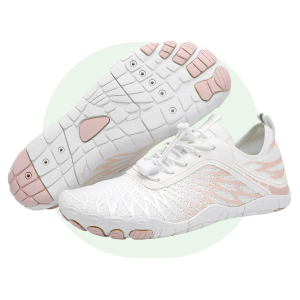
The shoes were called Lorax Pro.
I expected ugly orthopedic shoes. The kind that scream "I have health problems."
These looked... normal. Clean. Modern. Like something my daughter would wear.
Not medical. Not clunky. Just regular sneakers designed differently on the inside.
Ordered Tuesday. Arrived Thursday.
No appointments. No referrals. No waiting. Just a box on my doorstep two days later.
I put them on and felt the difference immediately. Not dramatic. Just... connected. I could feel the ground again.
What makes them different:
Nobody knew they were therapeutic
I wore them to brunch that first weekend.
Someone complimented my "new sneakers." Asked where I got them.
Nobody had any idea. They just thought they were nice shoes.
That matters. Nobody wants their shoes to announce "I have health problems."
By Week Four, Something Changed
The first morning felt strange. I woke up, swung my legs out of bed, and stood up.
No stabbing pain.
By week four, I caught myself jogging to catch up with a friend. Without thinking.
I stood there for a moment, confused. Waiting for it. It didn't come.
By week two, I stopped planning my morning around the pain.
By week four, I caught myself walking to get the mail without thinking about it. Without dreading it.
My progression:
- Week 1: Feet feel different, more aware of the ground
- Week 2: Morning pain noticeably less sharp
- Week 4: Walking without thinking about it
- Week 6: Said yes to a walking tour on vacation
That might sound small. But if you've spent years planning your life around foot pain, you know how big that moment is.
I wasn't the only one
My friend Carol, 62, had been dealing with plantar fasciitis for three years. Two months in, she texted me: "I forgot I used to have foot pain."
A man in my yoga class, 58, had tried everything. Shots, PT, three different orthotics.
Six weeks with these shoes, he said it was the first time he felt hopeful.
"I don't wake up thinking about my feet anymore," he said. "That's the point."
Why Other Solutions Fall Short
I tried to be fair about this. I really did.
Physical therapy works. I'm not going to pretend it doesn't. The exercises help. The stretches help. You feel better after a session.
But here's the problem: it's treating symptoms.
You go twice a week. You do your exercises. You feel more stable. Then life gets busy.
Plus there's the cost. And the time. And the waiting rooms. And the scheduling around your life.
Orthotics are the same story.
But your foot muscles aren't doing any work. They're just sitting there while the orthotic does everything.
So they get weaker. And a year later, you need new orthotics. And the cycle continues.
Stability shoes sound like the answer. More cushioning. More support. More protection.
But more cushioning means less feeling. Less feeling means your brain can't respond. And the whole problem gets worse, not better.
The only solution that actually addresses the root cause is letting your feet work the way they were designed to.
That's why I recommend Lorax Pro.
The Questions I Had Before Trying
I was skeptical. You probably are too. That's fine.
Here's what I wondered before I ordered.
1). Wouldn't my feet hurt without all that cushioning?
This was my biggest concern. I've worn cushioned shoes my whole life. The idea of less padding sounded painful.
But here's what I learned: these aren't extreme minimalist shoes. There's cushioning. Just without the elevated heel that throws everything off.
The first few days felt different. Not painful. Just... new. By week two, I couldn't imagine going back.
2). What about arch support? Don't I need that?
This one surprised me. Turns out external arch support can actually weaken your foot muscles over time. The support does the work, so your muscles don't have to.
A flexible shoe lets your foot strengthen naturally. Your arch learns to support itself again.
That said, if you have specific medical conditions, check with your doctor first. But for most people, the science is clear.
3). Do they actually look okay?
This mattered to me. I didn't want to wear ugly orthopedic shoes.
I wore them to lunch with friends. To the grocery store. To date night with my husband. Nobody said anything until I brought them up.
They just look like clean, normal sneakers. Good ones, actually.
Why I Recommend Lorax Pro
After three months of research and six weeks of wearing them every day, here's where I landed.
These shoes do something different. They don't prop you up. They don't add more cushioning. They don't treat the symptom while ignoring the cause.
They let your feet work.
Your 26 bones can move again. Your 100+ muscles can strengthen. Your natural balance system can wake up.
What I noticed:
I've recommended them to four friends now. Three of them have already ordered their second pair.
Let's Talk About Cost
I tried to be fair about this. I really did.
Cortisone shots run $150 to $300. And they wear off in weeks.
Custom orthotics cost $400 to $800. And you'll need new ones in a year.
Physical therapy for three months runs $2,000 to $5,000. That's if you go twice a week like they recommend. And when you stop, the benefits fade.
Lorax Pro is $69.95.
Less than a single cortisone shot. Less than half what you'd pay for orthotics you'll have to replace anyway.
And unlike those options, this actually addresses why you're feeling pain in the first place.
Here's what you get
One pair is $69.95. That's down from the regular $110.
Most people grab three pairs at $45 each. One for walking. One for around the house. One for errands. At that price, it makes sense to have a few.
Shipping is free on every order. Doesn't matter if you get one pair or three.
They arrive in 2-3 days. No waiting weeks for appointments. No referrals. Just a box on your doorstep.
And there's a 30-day trial. Wear them. Test them. See how you feel. If they don't work for you, send them back for a full refund.
I'm not here to tell you what to do. You know your body better than I do.
I was skeptical. You probably are too. That's fine.
But I'll tell you what I know.
I was 58 years old and dreading every morning. I was becoming someone who said no to walks, no to travel, no to anything that meant being on my feet.
Now I don't think about it.
I walk where I want. I say yes to things. I stood in a museum for three hours last month and didn't notice until my husband pointed it out.
That might sound small. But if you've been where I was, you know it's not.
The 30-day trial means there's no risk.
Either they work for you, or you send them back.
But if they work the way they worked for me, six weeks from now you might wake up and forget you ever had foot pain.
Just walking. Like you used to.